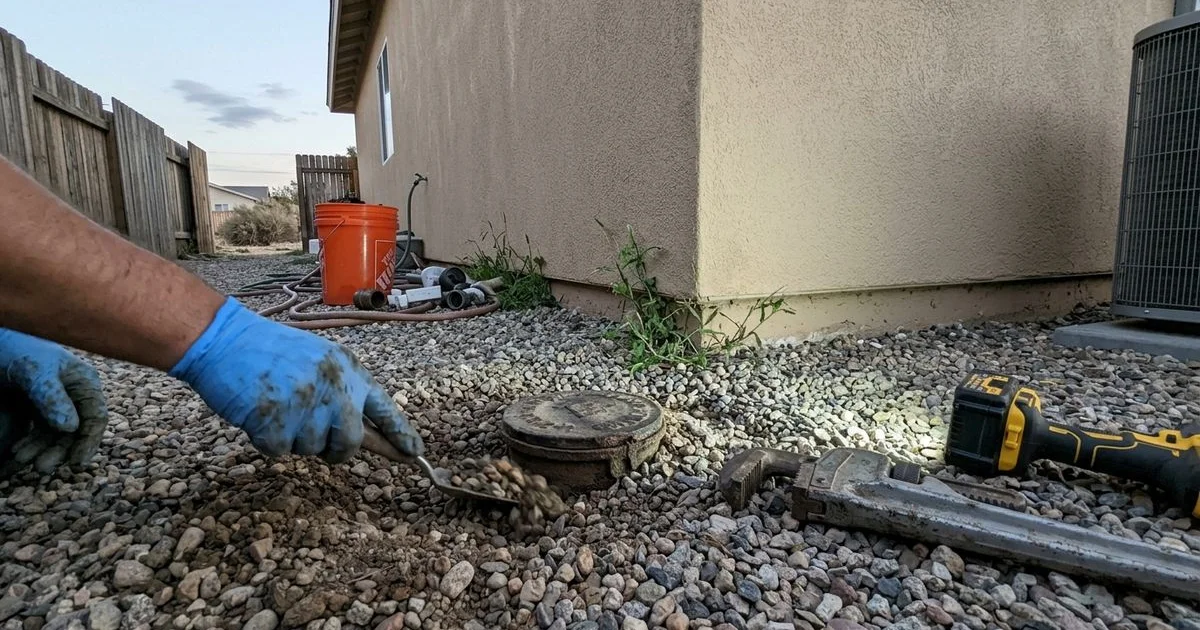
You know how fast a quiet weekend can turn into a messy plumbing scramble. When facing a main line sewage backup what to do first is critical for protecting your Imperial County home.
Industry experience shows that handling a sewage backup weekend correctly makes all the difference.
A sewer backup emergency requires fast action to stop the damage, so let’s look at the immediate steps to get your plumbing flowing again.
Main line sewage backup what to do: Stop using water right now.
The most important step is to halt all water usage immediately. A main line backup means the blockage is downstream of every fixture in the house.
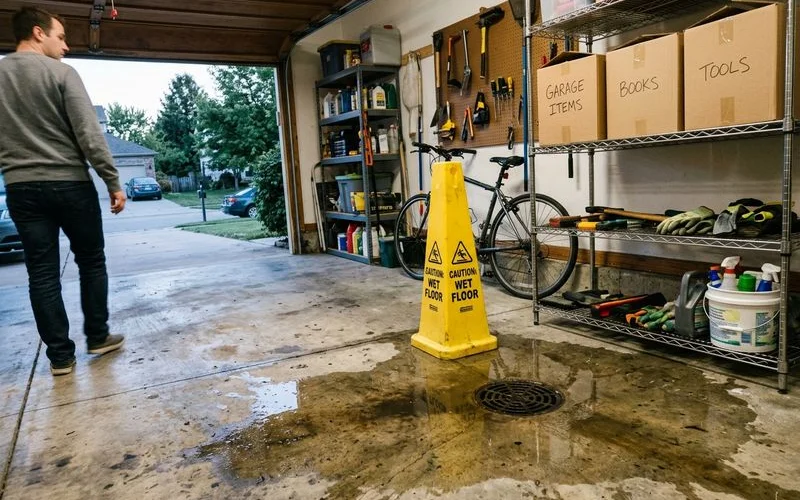
This backup pattern shows up constantly in older homes where the line has nowhere to send water. It comes back up at the lowest opening, usually a shower pan, a tub, or a garage floor drain.
Every additional gallon makes the disaster worse.
- Stop appliances: Older washing machines use up to 45 gallons of water per load.
- Halt all fixtures: That means no showers, no dishwasher, and no sink use until the line is cleared.
- Cancel mid-cycle loads: A drain pump discharges a lot of water fast straight to the lowest opening.
Plumbers in this market have seen entire floors destroyed because an appliance kept running. Tell everyone in the house immediately about the issue.
One person flushing a toilet without knowing undoes the last twenty minutes of cleanup.
Then call for emergency assistance. The Emergency plumbing dispatch runs 24 hours across Imperial County, weekends and holidays included.
We respond to this common after-hours call frequently in the older parts of El Centro and Calexico. Prompt action limits the damage to your property.
How to be sure it is the main line
Many homeowners confuse a local clog with a serious house-wide emergency. A single blocked fixture behaves differently than a whole-house issue.
The dispatcher always ask a few questions to tell them apart. Here is a quick breakdown to help you identify the problem.
| Issue Type | Identifying Signs |
|---|---|
| Branch Line | Only one sink or tub is slow, and everything else drains normally. |
| Main Line | Flushing a toilet makes water rise in a shower, or multiple fixtures back up. |
You are dealing with a sewer backup emergency if a floor drain is overflowing. Hearing gurgling in one drain when you run another is also a clear warning sign. Our guide on what counts as a plumbing emergency covers where the rest of these calls fall.
We use that specific difference to decide what equipment comes out to your home. A main line needs a heavy-duty drain machine and usually a diagnostic camera.
Older properties in El Centro often have aging clay pipes. These older pipes are highly susceptible to tree root intrusions that block the entire system.
Find the cleanout if you can
The cleanout is a capped pipe along the line’s path between the house and the street. It usually sits a few inches above ground near the foundation on the side of the house where the bathrooms are, or in a side yard.
The plumber look for this 3 to 4-inch PVC or cast iron pipe to access the blockage quickly. Knowing where this cap is saves real time on the service call.
You can tell the dispatcher on the phone, and the technician goes straight to it.
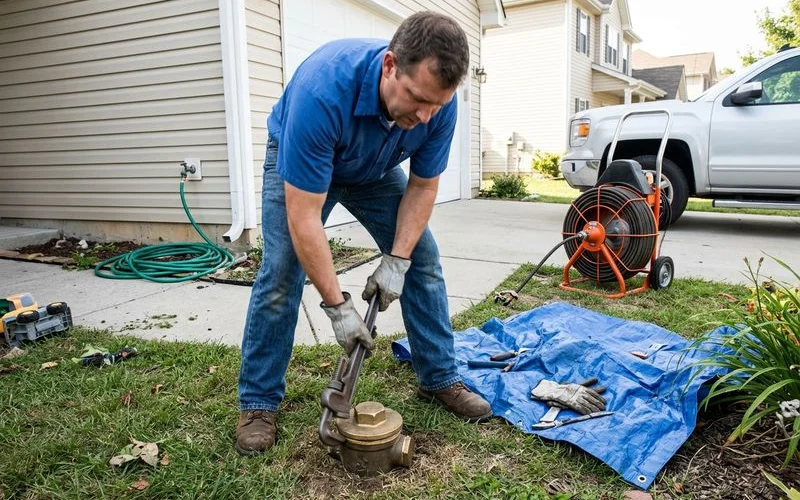
Do not open the cap yourself
A blocked line can be holding a standing column of sewage under pressure. Removing the cap releases all of it right at your feet. Once it is out, you have a contaminated yard on top of a blocked line. Leave it for the plumber, who has the containment and the equipment to control it safely.
Some older El Centro homes have no accessible cleanout at all. We can work through a pulled toilet or a roof vent when needed.
Installing a proper cleanout while the plumber is there is usually worth the investment. Every future service call gets faster and cheaper with a dedicated access point.
Stay safe around it
Raw sewage is a severe biohazard, not just an unpleasant mess. According to the IICRC S500 standard, a main sewer backup is classified as Category 3 black water.
Our safety protocols require full protective gear for this level of contamination. This water contains grossly unsanitary pathogens like E. coli and Salmonella.
Keep children and pets completely out of the affected area.
- Wear protective gear: Use heavy-duty rubber gloves and boots if you must walk through the water.
- Isolate equipment: Do not use a household shop vac you plan to use again for anything else.
- Sanitize completely: Wash hands and clothing thoroughly afterward, separately from other laundry.
- Control electricity: Cut power to circuits if water has reached outlets or an appliance.
In a garage, electrical safety is a real consideration because outlets are often low on the wall. We strongly advise throwing away any porous materials that got soaked by the sewage.
Carpet, padding, cardboard boxes, and particle board furniture generally cannot be saved. Hard surfaces can be properly cleaned and disinfected after the line is clear.
What happens when we arrive
The arriving plumber opens the cleanout under control to relieve the standing column safely. They clear the blockage with a heavy-duty cable to restore flow.
We use hydro jetting when the line is heavily fouled with grease, scale, or tree roots. This process applies 1,500 to 4,000 PSI of water pressure to scour the inside of a residential pipe completely clean.
Once the line is flowing, the important question is why it blocked in the first place. A one-off issue caused by something that should not have gone down the drain is just a temporary problem.
Diagnosing Repeat Problems
A line that has now backed up more than once in a year has a serious condition problem. You are likely dealing with a break, a belly, an offset joint, or root intrusion.
The plumber know that a damaged pipe will definitely do this again. That is exactly when a diagnostic camera goes down the line.
The drain cleaning service team carries the camera on the truck for immediate inspections. On a repeat backup, you see the actual pipe condition on the same visit instead of scheduling a second one.
Conclusion
Dealing with a main line sewage backup what to do next requires quick, decisive action. We know this situation is stressful for any Imperial County homeowner.
Following these safety steps will protect your property and your family from serious harm.
Contact an El Centro plumber immediately to resolve the emergency safely.