You know how most calls for no hot water start with a panicked homeowner staring at a dead tank. This exact scenario comes up constantly throughout the Imperial Valley. The real culprit is almost always the water itself, not a defective appliance.
Recent data shows our local tap water hits an extreme 20 grains per gallon (GPG) of hardness.
That dissolved rock destroys plumbing fast, making the choice of a water softener vs reverse osmosis critical. It is exactly why a proper water softeners and reverse osmosis assessment must happen before the expensive repairs begin. This guide will walk through the exact combinations that protect your home from sudden plumbing failures.
Three systems, three different problems
These treatment systems get confused constantly. Salespeople often benefit from mixed messages, but those resulting mistakes cost you money. Here is a concrete look at what each unit actually does.
We use this precise breakdown to clear up the confusion during emergency calls.
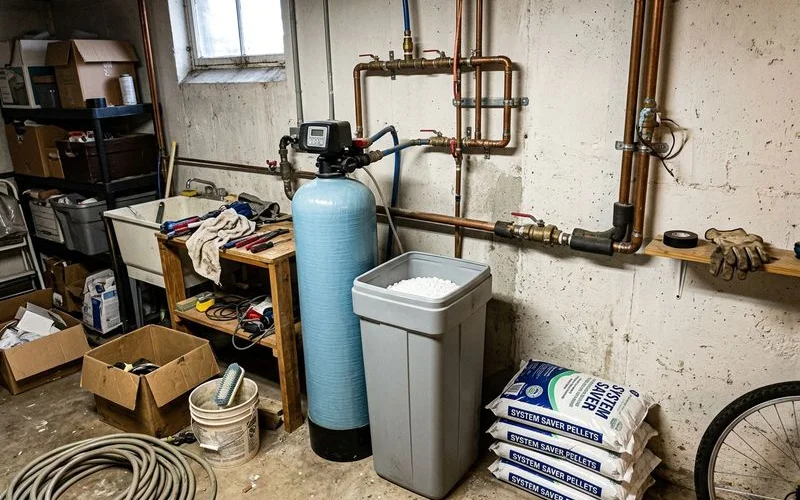
- Ion-exchange softener. This unit installs on the main line where water enters the house. Resin beads swap calcium and magnesium for sodium. The system then regenerates with a brine solution. This is the only option of the three that genuinely removes hardness. Over 85% of US homes have hard water. A softener is your frontline defense against scale buildup and burst pipes.
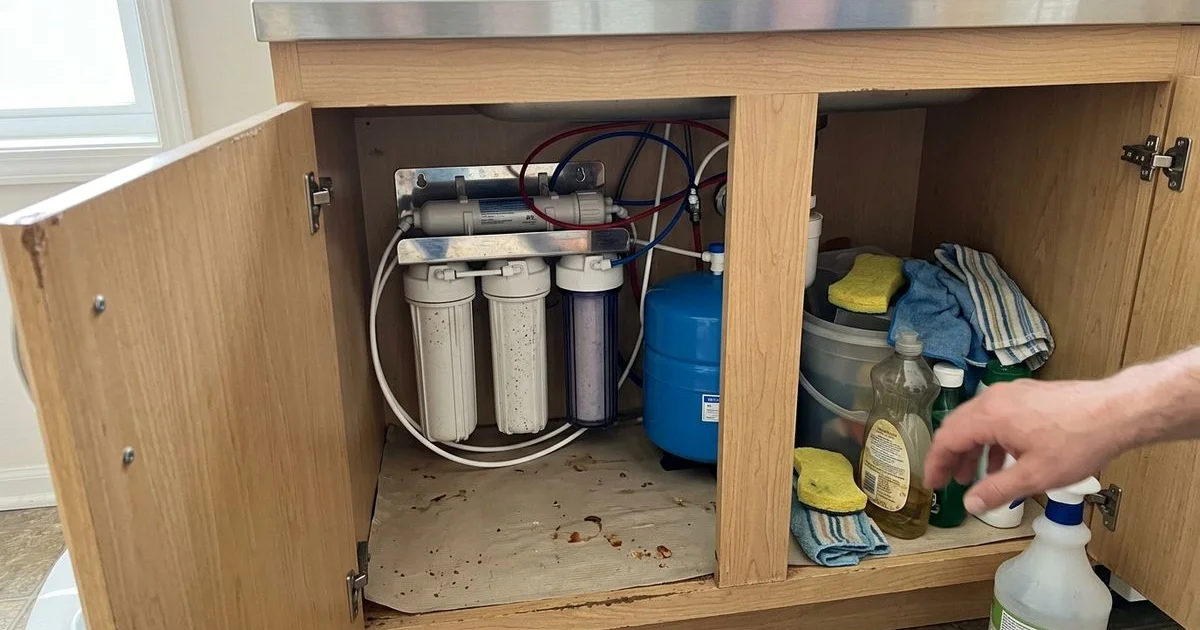
- Reverse osmosis. This system usually sits under a kitchen sink with a dedicated tap. The pressure pushes water through a semi-permeable membrane. That barrier rejects most dissolved solids. It produces high-purity drinking water slowly into a small storage tank.
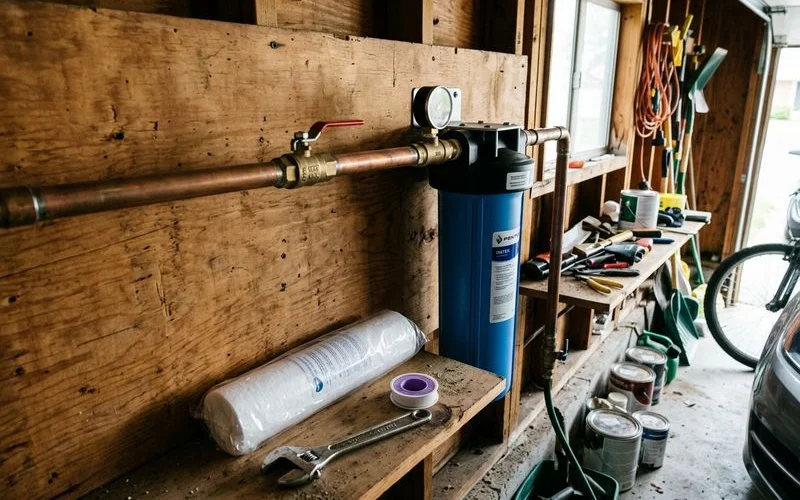
- Whole-house filtration. These cartridge housings sit on the main line. They contain sediment and carbon media. A filter reduces grit, chlorine taste, and strong odors for every fixture in the house.
The team sees people constantly buy the wrong unit for their specific problem. Filtration will not stop scale from fusing your shutoff valves. A softener will not make your tap water taste better. An RO system will not protect a water heater from a catastrophic failure.
Side by side
| Feature | Softener | Reverse osmosis | Whole-house filtration |
|---|---|---|---|
| Removes hardness | Yes | Yes, at one tap only | No |
| Protects water heater | Yes | No | No |
| Protects fixtures | Yes | No | Partially, sediment only |
| Improves drinking taste | Slightly | Substantially | Somewhat |
| Coverage | Whole house | One tap | Whole house |
| Maintenance Cycle | Monthly salt checks | 2 to 5 year membrane changes | 6 to 12 month cartridge swaps |
| Solves the valley’s main problem | Yes | No | No |
We reference these specific comparisons daily to help customers make quick, informed decisions. A clear view of maintenance cycles prevents expensive surprises down the road.
Comparing a softener vs filtration comes down to identifying your primary threat. Scale destroys appliances, while sediment ruins water pressure.
Which one solves your problem
The right equipment depends entirely on the symptoms your house is displaying. We always start our diagnostics by looking at the visible damage.
- Scale on fixtures, water heaters failing early, seized valves, white crust on shower heads. That is hardness. You absolutely need a softener. The Water Quality Association found that a standard tank water heater in hard water areas can fail in just six years. Tankless units can seize up in a staggering 1.6 years under these conditions. Nothing else on this list addresses that threat.
- Water tastes off, you buy bottled water, coffee and ice taste flat. That points to dissolved solids. A reverse osmosis unit at the kitchen tap is the direct and immediate answer.
- Grit in aerators, cloudy water after utility work, a chlorine smell in the shower. That is sediment and chlorine. A whole-house filtration system handles those specific contaminants perfectly.
- All of the above. This combination is extremely common in our area. Our standard installation pairs a softener on the main line with an RO tap in the kitchen. Filtration gets added only when sediment is a specific, verifiable complaint.
We want to avoid selling you unnecessary equipment. Targeting the exact symptom saves you money and protects your home properly.
Combining them properly
Order matters tremendously when systems are installed together. A wrong sequence will destroy your equipment and quickly void manufacturer warranties.
We follow a strict installation sequence to maximize the lifespan of every component.
- Sediment filtration goes first. Grit rapidly shortens the life of everything downstream.
- The softener comes next. It sits on the main water line to protect the rest of the house from mineral buildup.
- An RO unit goes last. It belongs under the sink, where it heavily benefits from the softened feed water.
Deciding the priority of an RO vs softener is simple. The softener must always protect the RO.
Our installations use softened feed water to double the lifespan of an RO membrane. This sequence is critical because hardness minerals foul RO membranes rapidly. Research indicates that an RO membrane on hard water can fail in two to three years. Softened water extends that life to a full four or five years.
One practical note applies to your outdoor plumbing. Many households leave one outside hose bib, or the entire irrigation line, on the unsoftened side. Plants simply do not need softened water. There is no valid reason to spend your salt capacity on watering the garden.
The one-system question
If budget allows only one, pick the problem that is actively costing you money. In this valley, that is almost always hardness. Scale is exactly what destroys water heaters and seizes shutoff valves during an emergency. Drinking water can be handled with a pitcher filter in the meantime. A scaling water heater cannot wait.
What about salt-free conditioners
Salt-free conditioners belong in this conversation because they are marketed heavily alongside traditional softeners. They do something entirely different, however. A conditioner changes the form that scale takes so it is less likely to adhere to surfaces. It does this without removing the actual hardness minerals from the water.
We look closely at the underlying technology, usually called Template Assisted Crystallization (TAC). A landmark Arizona State University study tested this specific process. They found that high-quality TAC media can prevent up to 97% of scale buildup inside water heaters. This makes it a highly effective preventative measure against emergency pipe bursts.
Key benefits of a TAC conditioner
- Requires zero salt refills or heavy lifting.
- Wastes no water during a regeneration cycle.
- Prevents devastating scale from destroying your water heater.
Our comprehensive guide on salt-based vs salt-free covers the tradeoff honestly. It clearly outlines when a conditioner is a reasonable choice for your home.
At severe levels like 20 grains per gallon, the distinction between conditioning and softening matters significantly. A traditional softener is usually required for extreme hardness.
Getting the right answer for your house
We always test the exact hardness at your tap before making any recommendations. The very next step is asking what specific plumbing emergency prompted your call.
The plumber then look at the expensive appliances you are trying to protect. This diagnostic process ensures you get the right fix the very first time.
We recommend the smallest, most efficient system that actually solves your problem. Buying oversized equipment is simply a waste of your money.
Matching the solution to the symptom
- If you already have a softener: The real complaint is usually drinking water. You need an RO tap, not a bigger softener.
- If you have an RO unit: Your water heater might still keep scaling up and failing. You need a whole-house softener.
- If you face constant clogs: Sediment is likely the culprit. You need targeted filtration.
Getting that diagnostic step right is the most valuable part of the conversation. It is exactly where every water softeners and reverse osmosis visit from a plumber in this market begins.
Call our El Centro plumbing dispatch today if you are tired of replacing water heaters prematurely. We will secure your plumbing and restore your peace of mind quickly.