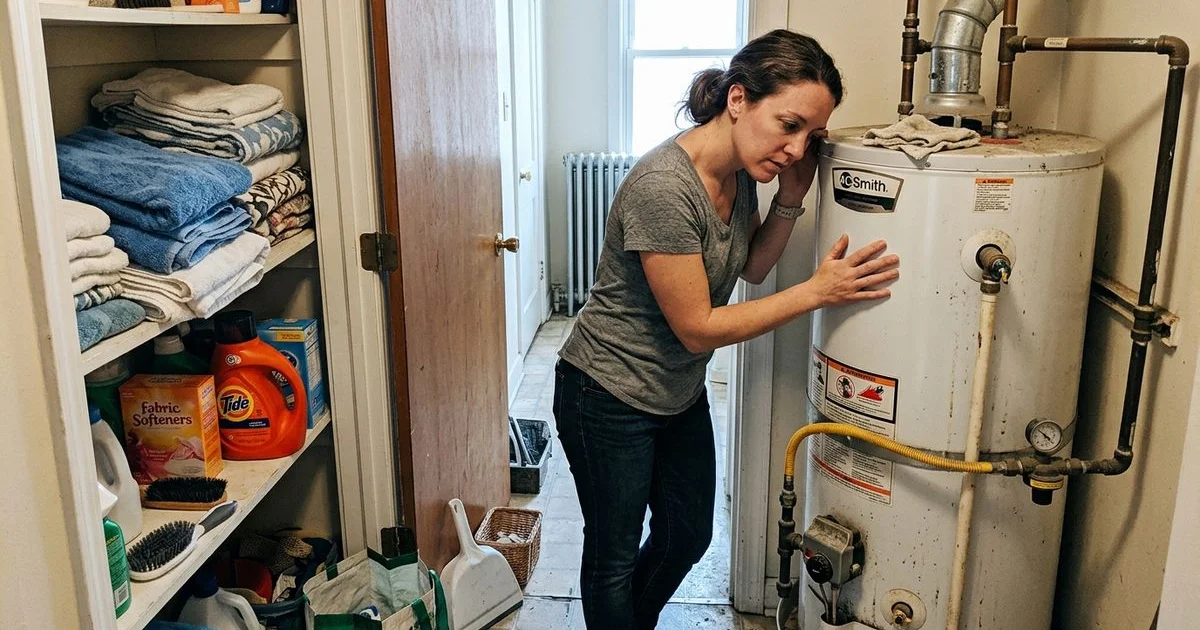
We hear it from Imperial Valley homeowners all the time: a sudden noise from the garage that sounds like a percolating coffee pot.
That sudden racket is alarming, especially when you are worried about a major plumbing emergency. When a water heater making popping sounds becomes your morning wake-up call, the culprit is usually sitting right at the bottom of the tank.
Our goal today is to explain exactly what causes this rumbling, what the data says about the risks, and the clear steps to fix it.
What you are actually hearing from a water heater making popping sounds
The popping, crackling, or low rumbling coming from a unit during a heat cycle typically points to one common cause in this valley.
Sediment is settling and hardening on the bottom of the tank.
We regularly find thick layers of calcium carbonate during standard maintenance calls.
The Breakdown of a Popping Tank
Here is the exact sequence of events that creates the noise:
- Mineral precipitation: Minerals fall out of the water as it heats and settle on the tank floor.
- Insulation layer forms: That layer builds up over months and years, acting as a thick blanket of insulation.
- Water gets trapped: The plumber frequently see this crust trap small pockets of water directly against the steel bottom.
- Flash to steam: When the burner fires, that trapped water is heated far past the standard 212°F boiling point and quickly flashes to steam.
Those pressurized steam bubbles forcefully punch their way up through the mineral crust.
We describe that specific pop as a tiny, localized steam explosion under the sediment layer.
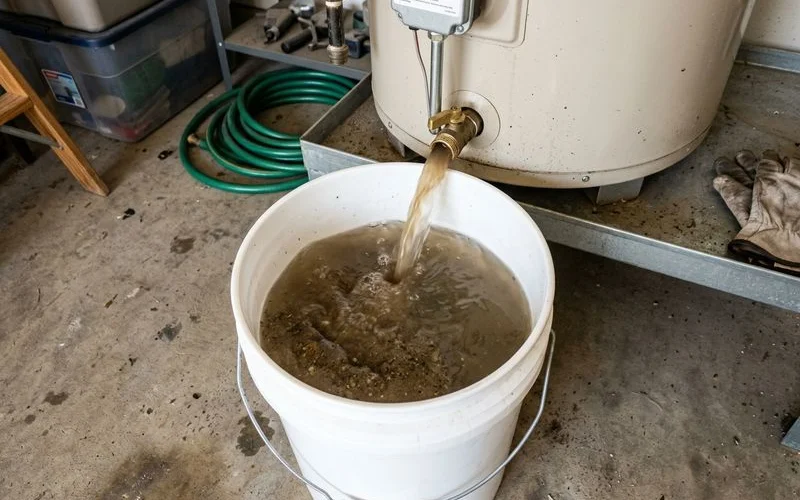
A low water heater rumbling is simply the same steam expansion happening at a larger scale, or it is the hardened sediment shifting as the metal tank expands and contracts.
Neither sound is a mystery, and neither happens inside a clean, well-maintained tank.
Most plumbers in this market make this the very first thing they check on a water heater repair call. For the full engineering breakdown of this failure mechanism, see why water heaters fail early here.
Why water heater rumbling happens so fast in El Centro
Water in this region runs at roughly 20 grains per gallon (gpg), drawn largely from the mineral-heavy Colorado River supply.
To put that number in perspective, the NSF/ANSI Standard 44 defines soft water as containing less than 1 gpg.
We are dealing with a local water supply that is essentially double the national threshold for the “very hard” classification.
| Water Quality Classification | Grains Per Gallon (GPG) |
|---|---|
| Standard Soft Water (NSF/ANSI) | Less than 1.0 |
| Moderately Hard | 3.5 to 7.0 |
| Very Hard Threshold | Over 10.5 |
| El Centro Average | ~20.0 |
The Accelerated Timeline
Every single heating cycle deposits more calcium and magnesium than the exact same cycle would in most other parts of the country.
A conventional tank that might take five or six years to develop a meaningful sediment layer elsewhere can reach that state in just two or three years locally.
This aggressive mineral accumulation explains why a heater that is only a few years old can already be producing serious water heater noise.
The team often pulls out gravel-sized calcium chunks from surprisingly new units during routine service.
Warm incoming supply water through the long summer months just accelerates the entire process.
The mineral load is sitting much closer to its precipitation point before it even enters the appliance.
The risk of leaving it
The noise is simply an audible symptom, and the symptom itself is not the actual problem.
The real danger lies in what that heavy sediment is actively doing to the internal steel tank.
Our local plumbers see the long-term damage when scale thoroughly insulates the burner from the water above.
The True Cost of Ignored Sediment
When you ignore a noisy tank, you are inviting several compounding issues:
- Hidden Corrosion: Heat stays trapped in the steel floor, causing the bottom to run much hotter than designed and corrode from the inside out.
- Plummeting Efficiency: The U.S. Department of Energy currently estimates that water heating accounts for roughly 18% of a typical home’s total energy consumption. Recent 2026 industry data shows severe scale buildup can drop efficiency by up to 48%.
- Higher Gas Bills: Longer burn cycles to heat the same amount of water mean your monthly utility costs will spike.
- Slower Recovery: A struggling burner means your family will run out of hot water much sooner during morning showers.
We always warn customers that this combination of physical stress and inefficiency is a ticking clock for catastrophic failure.
The endpoint
A popping water heater that gets ignored does not stay a noisy water heater. It becomes a leaking one, usually at the bottom seam, usually without warning, and usually onto a garage floor with things on it.
Other noises that are not sediment
Not every strange sound points directly to calcium carbonate buildup in the tank.
The plumber rely on specific acoustic cues to diagnose different mechanical issues quickly.
Here is a quick breakdown of other common appliance sounds you might hear:
- A high-pitched whistle or hiss: This is often the Temperature and Pressure (T&P) relief valve venting. The standard T&P valve is a critical safety device designed to open if internal pressure exceeds 150 PSI or the temperature surpasses 210°F. Sometimes, a hiss is just a partially closed valve on the main supply line.
- Ticking or tapping: This is usually normal thermal expansion in the copper or PEX pipes as they rapidly heat and cool. It is generally not a mechanical concern on its own.
- Screeching: Water forcing its way through a restricted pathway creates this noise, frequently caused by a partly closed inlet valve.
- A low hum on an electric unit: This indicates heating element vibration. It is typically harmless, and a simple tightening of the element often resolves the hum.
We find that sediment popping is highly distinctive once you have heard it yourself.
The noise is irregular, distinctly percussive, and perfectly synchronized with the gas burner actively running.
Flush or replace
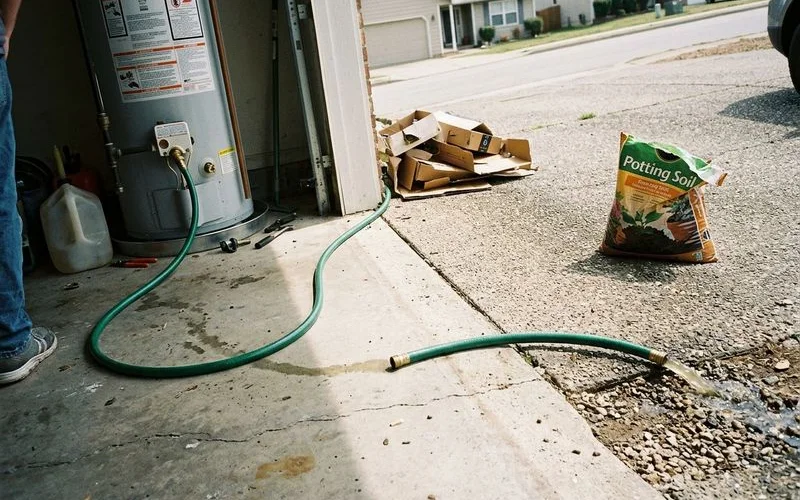
Homeowners frequently ask if a simple flush is enough to save a noisy system.
Our recommendation always depends heavily on the age of the unit and the severity of the mineral crust.
A standard residential tank usually has an expected lifespan of 10 to 15 years, but untreated hard water can easily cut that duration in half.
Making the Right Service Call
- Flushing helps when the unit is reasonably young, the noise is a recent development, there is absolutely no rust in the hot water, and there is no moisture weeping at the base. Draining the loose sediment out before it permanently consolidates often quiets the tank and quickly restores heating recovery.
- Flushing helps less when the tank has gone many years without basic service. The sediment hardens into a solid layer that simply will not pass through a standard drain valve. It is still worth attempting a flush, but realistic expectations are necessary.
- Replacement is the conversation when the unit is past its rated life, you notice rust on the hot water side, the drain valve is clogged solid with calcium, or there is any visible moisture pooling at the base.
While the tank is fully drained, it is also the perfect time to physically inspect the sacrificial anode rod. This magnesium or aluminum rod is designed to attract corrosive elements away from the steel walls.
We always replace a consumed rod immediately because a fresh one actively protects the bare steel going forward.
Tackling both the flush and the rod inspection together, on a strict annual schedule, is exactly what our water heater repair service sets up with people. It remains the only realistic way to get a full service life out of an appliance fighting 20-grain hard water.
Your Next Steps
We strongly encourage you to take action before a small rumble turns into a flooded garage. If your water heater making popping sounds is keeping you up at night, call our El Centro plumbers and schedule a professional flush and inspection immediately.